AI Democracy, OpenClaw for us all
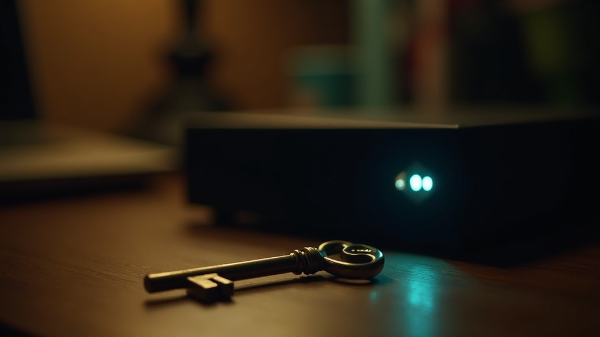
There is a particular kind of quiet that settles over a terminal window at 8 a.m. on a Tuesday when you are the only person on earth who can see what is happening on the other end of it. No support ticket. No status page to refresh. Just you, a config file, and a decision about who, exactly, gets to talk to the thing you just built.
I spent part of this morning doing precisely that — flipping a setting called `gateway.bind` from `loopback` to `lan`, watching a self-signed certificate mint itself into existence, and approving a device pairing request from my own phone as if I were a bouncer checking my own ID at a door I installed myself. It is, by any reasonable measure, boring infrastructure work. And it is also, I have come to think, one small answer to a question my Serendipity35 co-conspirator Ken raised in this space a few months back in 'Your AI Is Not Free'"?: if free AI makes you the product, what does *running your own* make you?
Most people's relationship with artificial intelligence today is one of tenancy, not ownership. You open ChatGPT, or Claude.ai, or the Gemini app, and you are a guest in someone else's skyscraper — a very nice skyscraper, with excellent amenities, but a skyscraper nonetheless, and the lease terms are the landlord's to write and rewrite. Your prompts, your corrections, your half-finished thoughts typed in at midnight: all of it lives on servers you will never see, governed by a privacy policy you almost certainly didn't read past the second paragraph. "Free" is a business model, not a gift, and Ken said as much in this space not long ago.
OpenClaw — the open-source project I've been quietly building on both my Mac Studio and my nexttroll.com domain this week — offers a different architecture, and it is worth walking through precisely because the architecture is the point. You run the gateway process yourself. You supply your own API keys to whichever model you choose to pay for — Anthropic, Google, whoever earns your dollar this quarter — and you pay for compute the way you pay for electricity, metered and legible, rather than a flat-rate subscription that obscures what any single conversation actually cost. Your logs, your memory files, your configuration: all of it sits as plain files on a disk I can `ls` myself, not as an abstraction behind someone else's login screen.
There is a second piece of this worth dwelling on, because it is the part that actually excited me: **Skills**. In a cloud AI product, the vendor decides what the assistant is allowed to do, and you are notified of new capabilities the way you are notified of app updates — after the fact, and without a vote. In OpenClaw, a Skill is a modular, inspectable procedure — a little packaged competence — that you add, edit, or write outright. You are not a user of a product anymore. You are closer to being the systems administrator of a very small, very personal machine — which, if you have read this blog for any length of time, you will recognize as exactly the seat I have always preferred.
None of the actual sovereignty here lives in anything glamorous. It lives in bind modes, auth tokens, TLS certificates, device pairing approvals — the unglamorous plumbing that determines who can reach your AI and what it is permitted to see. I spent a genuinely irritating stretch of this morning discovering that a browser will flatly refuse to hand over "device identity" to anything served over plain HTTP from a LAN address, because modern WebCrypto requires what's called a secure context, and no amount of arguing with a curl command changes that. The fix — self-signed TLS, a certificate warning to click through, a pairing request to approve — was ten minutes of real friction. It was also, I noticed afterward, the first time all week I understood *exactly* why a piece of software was refusing me, rather than just accepting that it had.
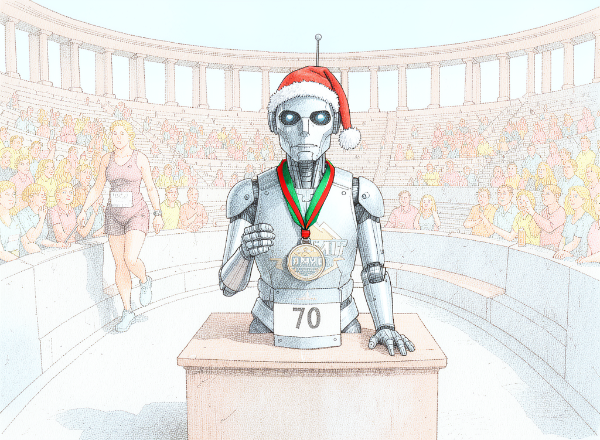
That, I think, is the actual shape of "AI democracy" here — and I want to be precise about what I mean by it, because it is not a claim that everyone will run an identical assistant, or that we're all about to become network engineers. It means the tools required to configure and own a working AI assistant no longer live exclusively behind a computer science degree or a corporate badge. The barrier moved. It used to be technical. Now it is largely a matter of persistence — a willingness to sit through the boring, occasionally maddening reps of learning why a thing is broken before you can fix it. I have written before about training a 5K at seventy: nobody hands you the fitness. You do the unglamorous mileage, and it accrues.
I'll concede the honest caveats, because a post that skips them isn't worth the pixels. This is real effort, not a weekend hobby — there were dead ends this week, a Rust compiler grinding through hundreds of crates in the background the whole time as a reminder that not everything gets easier. And this is not full independence, whatever the word "sovereignty" might suggest. I am still, at the end of the day, paying Anthropic for the actual intelligence doing the thinking; I have relocated the boundary of control, not abolished my dependence on a large company entirely. Self-hosting an AI gateway doesn't make you off the grid. It makes you legible to yourself, which is a smaller and more honest promise.
There's an irony sitting underneath all of this that I don't want to paper over: the assistant that helped me research and draft this very post — reading through nineteen pages of my own back catalog to get the voice roughly right, checking a Gemini API key against my own config, watching a build compile in the background — is the same private, locally-configured AI this post is about. I did not write every sentence above; I directed the machine that wrote most of them, on hardware I own, with API keys I hold, in a conversation that will live in a file on my own disk when we're done. Consider this piece Exhibit A, not just an argument.
So — not an answer, but a question worth carrying to your own terminal, wherever it happens to sit: if you actually knew, with certainty, where your last conversation with an AI physically lived — whose disk, whose jurisdiction, whose future data breach — would you have said anything differently to it?
 Recent college graduates face technology conscription: the expectation to feed, train, and validate the very AI models designed to automate their future career paths.